
This archived material is for informational purposes only; the information provided was accurate at the time of publication but may no longer be current.
This archived material is for informational purposes only; the information provided was accurate at the time of publication but may no longer be current.
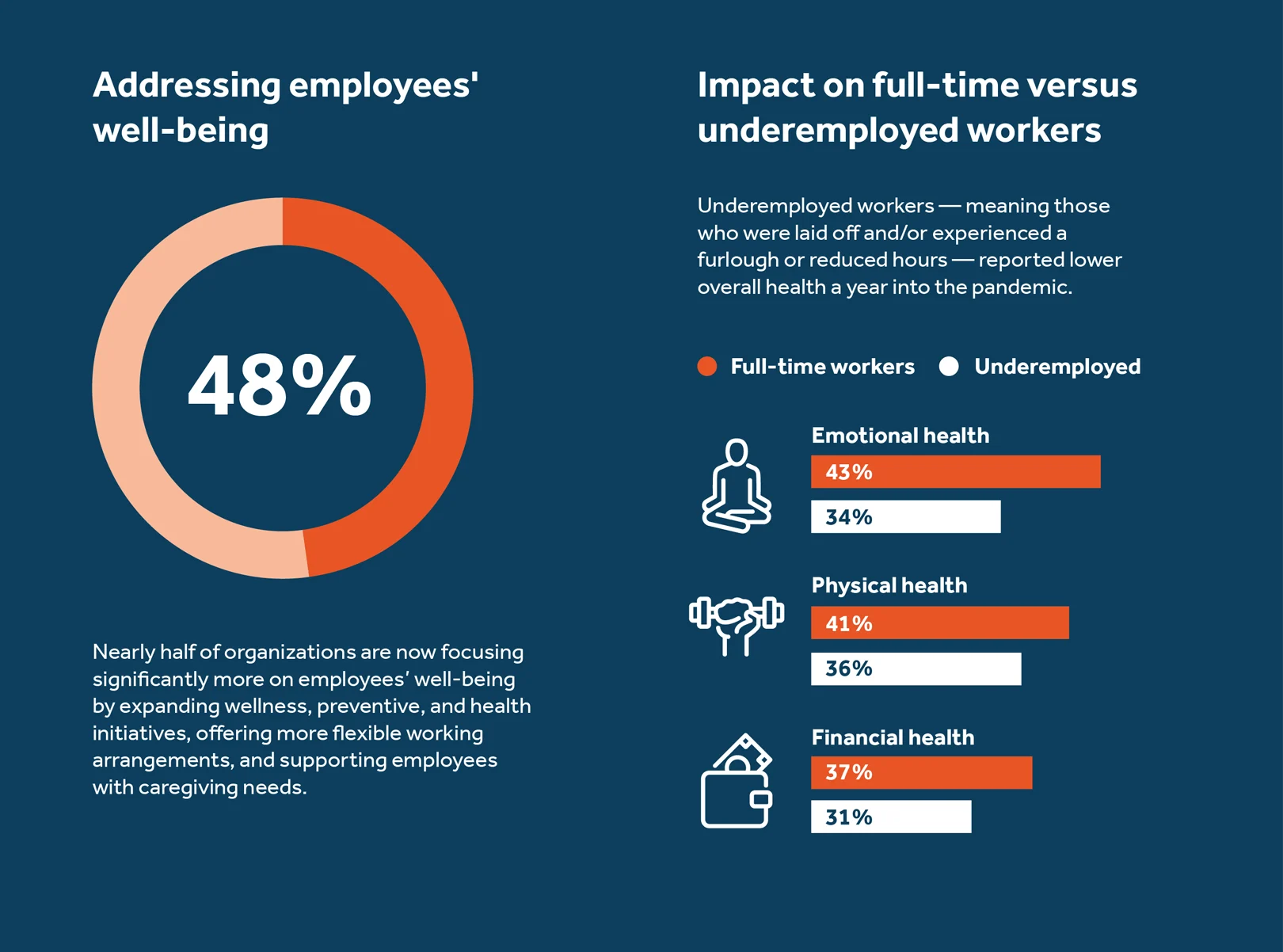
With the global influence of COVID-19, well-being has been brought to the forefront within the workplace. While many businesses made seamless shifts to accommodate lockdowns and new ways of working, many employees felt the stress of an uncertain era disrupting their lives. How has the mental, physical, and financial health of working Americans been impacted, and what role are employers playing in workforce well-being in the pandemic era and beyond?
Read on to learn about how the minds, bodies, and wallets of American workers have changed.
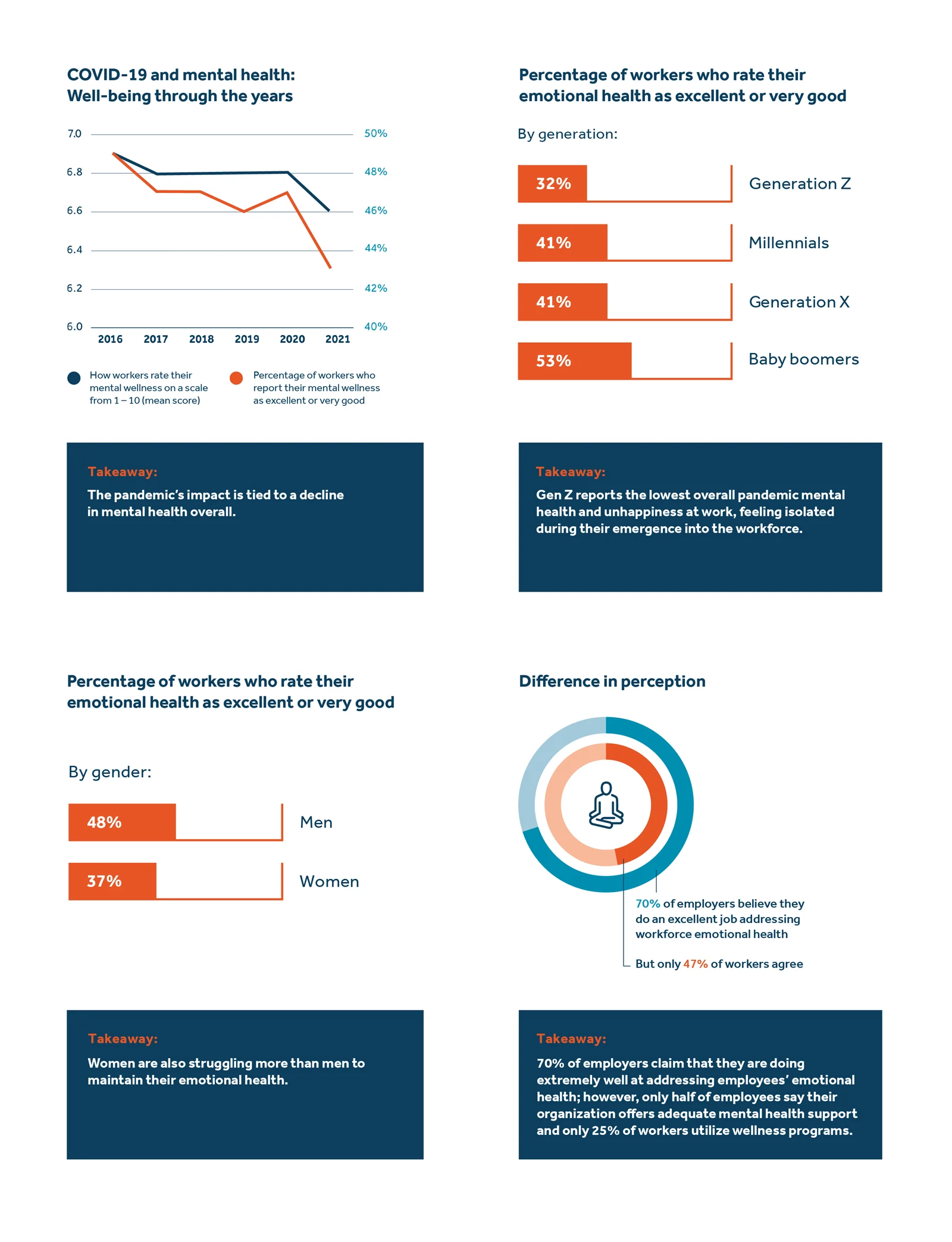
The mental and emotional wellness of working Americans has been affected most since the emergence of COVID-19
The pandemic has impacted mental health in the workplace for all segments, but younger workers, women, and those who are underemployed are struggling significantly more with their psychological health. Employers recognize the importance of providing well-being benefits and resources; however, a lack of clear communication means that workers are rarely utilizing these programs, even when available at no cost.
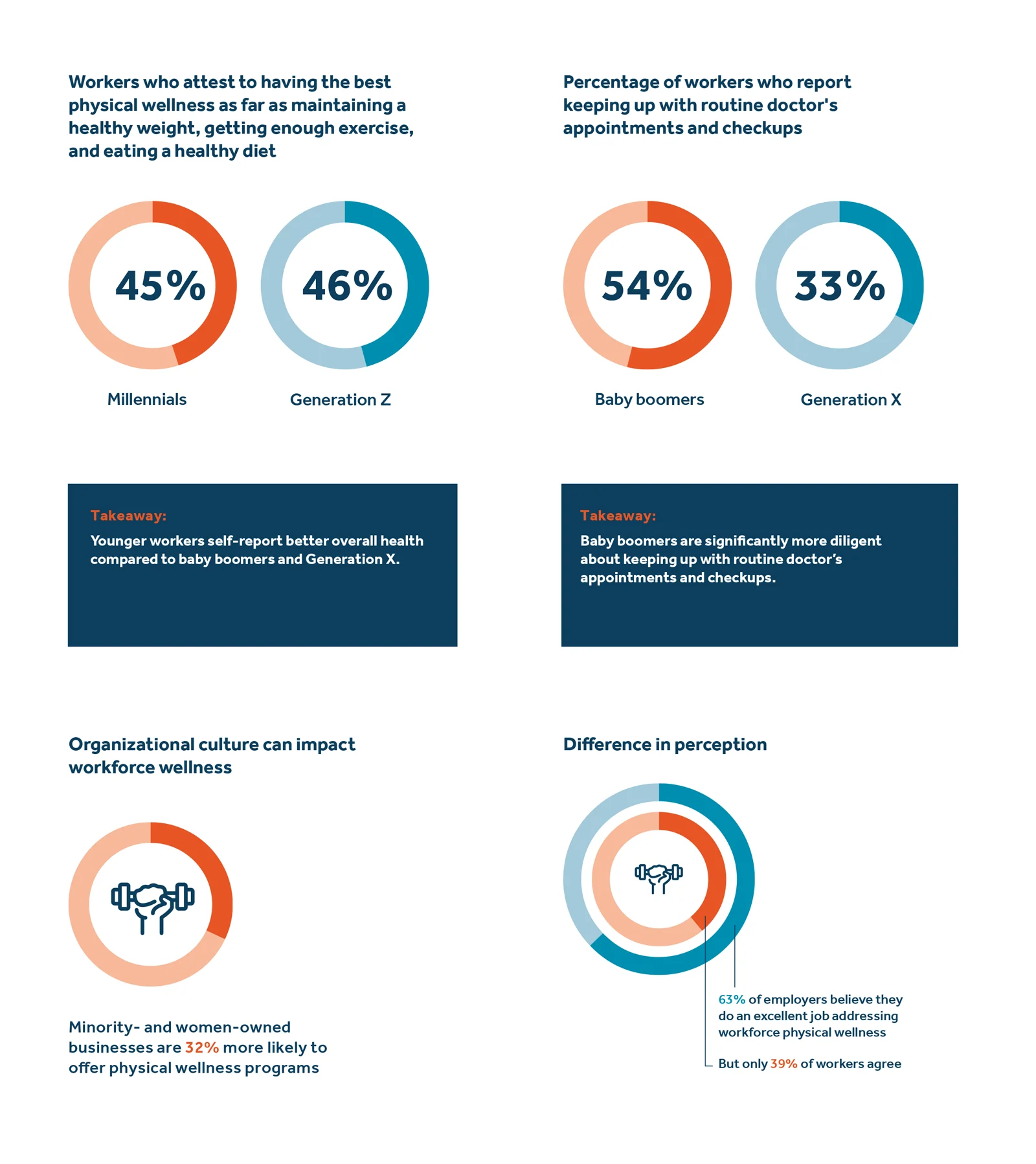
Making time for physical wellness continues to be a struggle for many workers
While the younger generations of Gen Z and millennials report being healthier overall, workers across the board admit they’re battling to maintain a healthy weight, get enough exercise, and sustain a healthy diet, which is a trend that spans back to before the pandemic. Nearly a quarter of all employees say that COVID-19 has had a significant negative impact on their physical health.
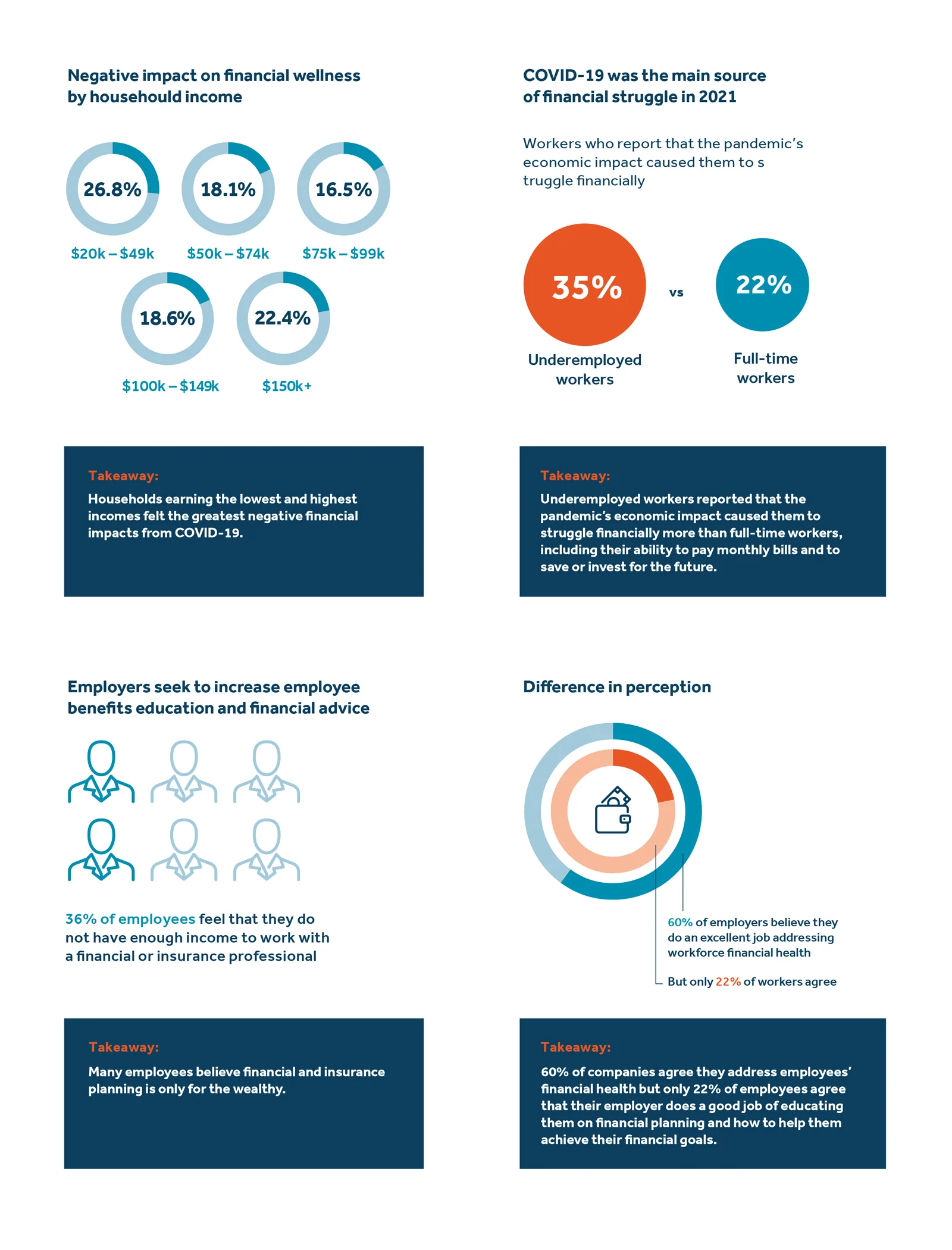
The financial impact of the pandemic is Americans’ largest source of stress
Americans’ financial health has had its ups and downs during the past six years. In 2019, the economic boom and low unemployment rates resulted in high levels of financial wellness, according to Guardian's Workplace Benefits Study research. But two years later in 2021, the pandemic, even for those working full time, has negatively affected workers’ wallets.
Read the full report now
Learn about how the mental, physical, and financial health of working Americans been has impacted, and what role are employers playing in workforce well-being.
Subscribe to receive more thought leadership content from Guardian
All fields are required unless marked optional.
